A Submarine Chaser, a Place Called Stumble Inn, and the Two Brothers Who Ran Grand Island's Wildest Chapter
They used a decommissioned Navy submarine chaser to smuggle whiskey across the Niagara River. And they named it "Stumble Inn."
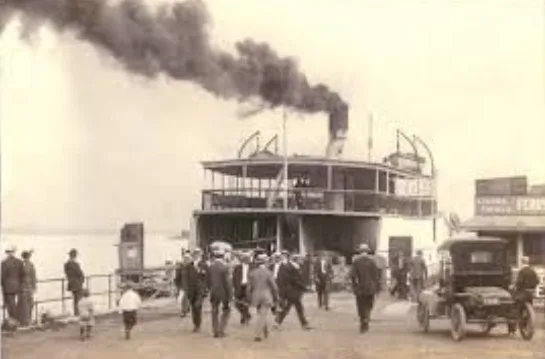
Frank and Charles Fix were born right here on Grand Island, near where the Edgewater Hotel would later stand. They grew up working excursion boats as teenagers, saved their money, and bought their first vessel — the Silver King — before either of them turned twenty. By the time Prohibition kicked in, these two already owned a small fleet and ran the Grand Island ferry. People said either brother could pilot a boat blindfolded through the Niagara's currents and slide it into any cove along the shoreline without making a sound.
And Grand Island in the 1920s? It was practically built for what came next.
Dark Roads and Canadian Whiskey
About 650 people on sixty square miles. State roads completely deserted in the early morning hours. The operation ran like clockwork — load up on the Canadian shore, cross the west branch to Grand Island, truck everything across those dark empty roads, then load it onto another boat for the final run to Buffalo. Distributors were already waiting.
The brothers bought the Bedell House, a popular resort and dock. Then they bought another property near the ferry landing and named it — I'm not kidding — Stumble Inn. They were selling and distributing right out in the open. And then they went and bought an actual decommissioned U.S. Navy submarine chaser, named it Stumble Inn 1, and used a literal warship as their rum runner.
The Numbers Are Wild
In a single June 1923 trip aboard the steamer Charlotte, federal indictments say the Fixes moved 1,100 cartons of Canadian ale and 51 barrels of beer. Two weeks later — another 605 cases of ale and 50 barrels. The following month — 350 cases of whiskey. River men estimated they controlled as many as forty boats, even though only fourteen were registered under their name. They were running loads as far as Windsor, Ontario — two hundred miles away.
And during the day? Frank or Charles would still be right there at the helm of the ferry, keeping up appearances as the same hardworking river men everyone had always known.
The Feds Come Calling
Eventually the law caught up — sort of. U.S. Attorney General William J. Donovan sent agents to build a case, and in 1924 the Fix Brothers, Frank's son Clarence, and several associates were hit with ten counts of conspiracy to violate Prohibition law. The government probably expected a dramatic trial.
They never got one.
The Fixes just pleaded guilty. Charles got three months in the Erie County Penitentiary and a $2,000 fine. Frank got a $2,000 fine and walked. River men said the Fixes "got away pretty lucky." And sure enough, once Captain Charlie finished his sentence, they picked right back up — smaller scale, but still at it. When their $65,000 steel ferry got seized after agents caught it carrying liquor, the brothers simply bought a tugboat from the government and kept running ferry service anyway.
You can't make this stuff up.
More Than Just Outlaws
But here's the thing about the Fix Brothers — they weren't just outlaws. The night Frank spent two hours maneuvering his ferry through a treacherous ice floe to rescue two fishermen who would have frozen to death? That happened. The time he fired up the ferry after hours just to get a young woman safely home because she'd missed the last boat? That happened too.
Frank Fix died of a heart attack at the helm of the Seabreeze on August 26, 1945 — still piloting the same water he'd known his entire life. Charles passed in 1934.
Today, the old Busti Avenue lighthouse the brothers once transported by barge to Grand Island still stands at the Buffalo Launch Club. A quiet little reminder of this island's wildest chapter.
Got a Prohibition story connected to Grand Island? A family name tied to the river? Drop it in the comments or message 716 Spotlight. We're collecting leads for future stories.
Comments
Loading comments...
Leave a Comment