
The City of Light, September 1901
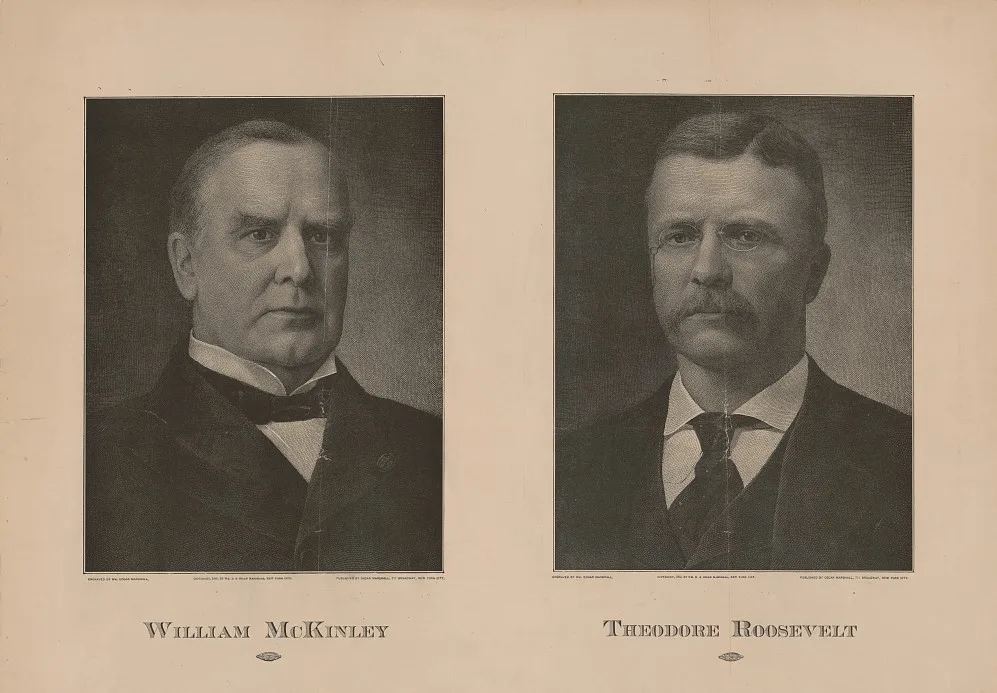
In the summer of 1901, Buffalo was the center of the world, or at least it felt that way. The Pan-American Exposition had opened that spring, a sprawling fair built to show off American industry, engineering, and above all electricity. At night the grounds sparkled with electric lights, a spectacle that most visitors had never seen at that scale. There were staged cavalry skirmishes three times a day. Vice President Theodore Roosevelt had come to town to open it.
The Exposition had been postponed once already, during the Spanish-American War. President William McKinley wanted to be there. He was six months into his second term, had led the country out of a recession and through a war, and was about as popular as a president gets. According to the Library of Congress, he wanted to be at an event that showed off the United States as a regional power.
He arrived in Buffalo in early September and stayed at the home of John Milburn, the president of the Exposition, at the corner of Delaware Avenue and West Ferry Street.
Friday, September 6: The Temple of Music
On the morning of Friday, September 6, the presidential party took a train to see Niagara Falls. In the afternoon, McKinley came back to the Exposition grounds for a public reception in the Temple of Music. He'd been greeting people in a receiving line for about seven minutes, shaking hands with anyone who wanted one, when a man reached the front.
His name was Leon Czolgosz. He was an anarchist. His right hand was wrapped in a handkerchief, as if it were bandaged. Under the handkerchief was a gun. He fired twice at point-blank range before he was tackled to the ground.
Both bullets hit McKinley. One lodged deep in his abdomen.
The Surgeon in Niagara Falls
The man best suited to operate on the president was Dr. Roswell Park, one of the leading surgeons in the country and the namesake of the cancer center that still carries his name in Buffalo. He wasn't available. He was in Niagara Falls, in the middle of another operation.
The story that's been passed down, as the Theodore Roosevelt Inaugural Site's executive director told Spectrum News, goes like this. They told Park he had to come back to Buffalo right away. He said he couldn't leave the operation if it were the president of the United States. They told him it was.
By the time Park could get there, other doctors had already operated. As was the practice of the day, McKinley was moved to a private home to recover rather than a hospital. He went back to the Milburn house on Delaware Avenue.
Eight Days
For a week, the country watched the bulletins out of Buffalo. Early on, there was real hope. McKinley seemed to be recovering. The reports from the Milburn house were cautiously good.
Vice President Roosevelt had been in Vermont at a speaking engagement when the shots were fired. He came to Buffalo the next day and accepted an invitation to stay with a friend, an attorney named Ansley Wilcox, whose home on Delaware Avenue was about a mile south of the Milburn house. A temporary office with a telegraph was set up for the vice president there. Most of McKinley's cabinet came to Buffalo too.
Then, when things looked stable, Roosevelt left. He went to the Adirondacks to join his family. The Constitution Center notes that over those eight days, reports about McKinley's condition varied, and Roosevelt was traveling.
On September 12, six days after the shooting, McKinley's condition deteriorated significantly. Gangrene had set in around the wound. Word went out to find the vice president.
Saturday, September 14, 1901
President William McKinley died in the early morning hours of Saturday, September 14, at the Milburn house. He was the third sitting president to be assassinated, after Lincoln in 1865 and Garfield in 1881. The Library of Congress records that he died whispering the words of his favorite hymn, "Nearer, My God, to Thee."
Roosevelt had been racing back from the mountains. He arrived in Buffalo on the 14th and went directly to the Wilcox house on Delaware Avenue.
That afternoon, at 3:32 p.m., in the library of his friend's home, with members of the cabinet and other officials standing around him, Theodore Roosevelt took the oath of office as the 26th President of the United States. U.S. District Judge John R. Hazel administered it. Roosevelt was 42 years old, the youngest president in American history.
The National Park Service describes the mood plainly. Outside, people were grieving the loss of their president. Inside, a new one was being sworn in.
Roosevelt had privately feared the vice presidency was the end of his political career, a powerless office where ambitious men went to be forgotten. He'd been in it for barely six months.
What Buffalo Did With It
The Wilcox house is still there, at 641 Delaware Avenue. It's the Theodore Roosevelt Inaugural National Historic Site, run by the National Park Service, and you can walk through the library where it happened. In 2001, for the 100th anniversary, they filmed a reenactment of the inauguration. New exhibits installed in 2009 take visitors back to the day itself.
The Milburn house, where McKinley died, is gone. The Temple of Music is gone too, along with almost everything from the Exposition. The fair was always meant to be temporary, and it was.
What's left is the street. Delaware Avenue, from West Ferry down to the Wilcox house, is where the whole thing played out. A president died at one end. A younger, more restless one took the oath at the other. The nineteenth century ended and the modern era began, as the Library of Congress puts it, on a mile of road in Buffalo.
Ansley Wilcox, writing a year later, understood what had happened in his living room. His words are on display at the site. It's worth the trip on Monday, or any day, to stand in that library and think about it.
Plan a visit at the Theodore Roosevelt Inaugural Site.
Comments
Loading comments...
Leave a Comment